
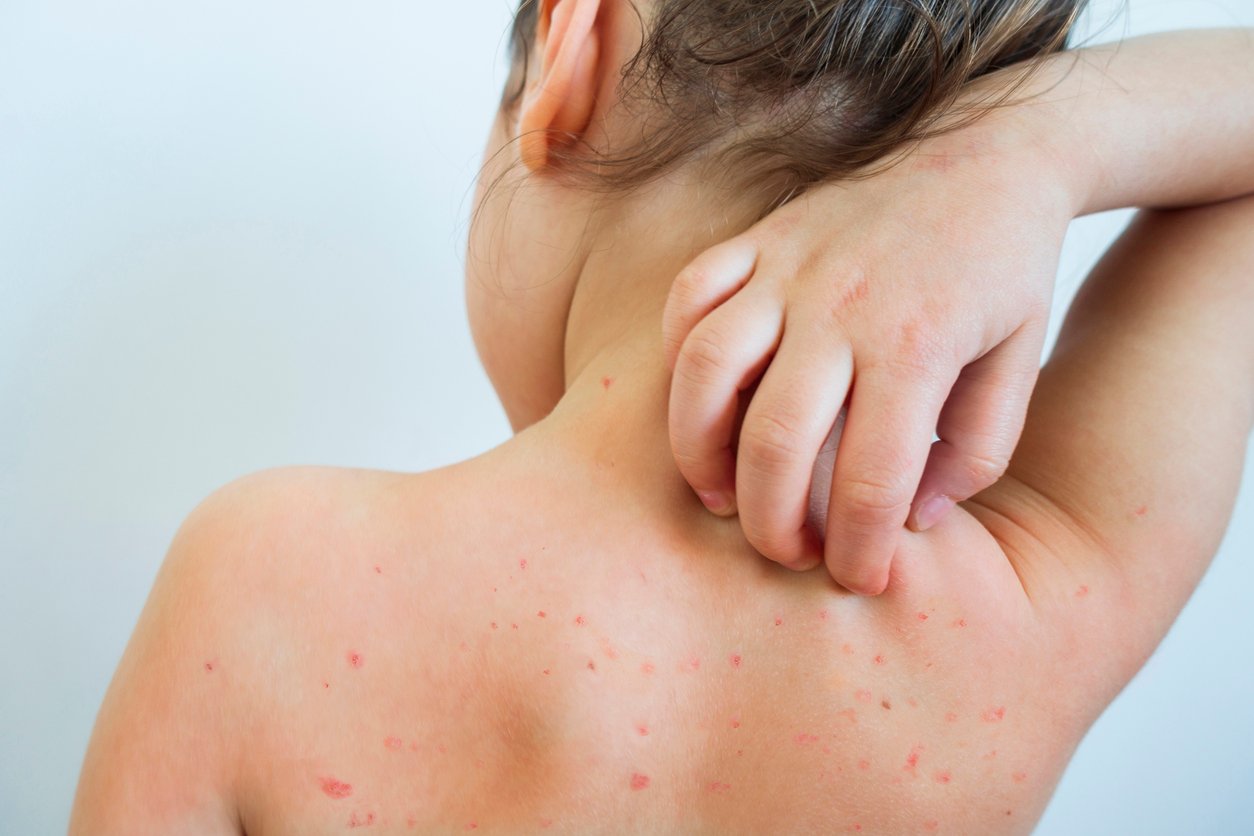
Dermatite de contact chez les enfants. Symptômes. Traitement
La dermatite de contact chez les enfants survient lorsque la peau entre en contact avec un irritant ou un allergène, entraînant une inflammation. Les symptômes peuvent varier en fonction de la cause de la dermatite de contact, mais peuvent inclure :
Rougeur : La peau affectée peut paraître rouge ou rougie.
Démangeaisons : les démangeaisons sont un symptôme courant de la dermatite de contact et peuvent varier de légères à sévères.
Gonflement : La peau peut enfler, surtout si la réaction est grave.
Cloques : Dans certains cas, de petites cloques remplies de liquide peuvent se développer sur la peau.
Peau sèche et craquelée : La peau peut devenir sèche et craquelée, surtout si la dermatite de contact est chronique.
Douleur ou inconfort : La zone touchée peut être douloureuse ou inconfortable, surtout si la peau est irritée ou endommagée.
Éruption cutanée : Une éruption cutanée peut se développer, dont l’apparence peut varier en fonction de la cause de la dermatite de contact.
La dermatite de contact peut être causée par un large éventail de substances, notamment des savons, des détergents, des cosmétiques, des parfums, des plantes (comme l’herbe à puce ou le chêne empoisonné), des métaux (comme le nickel) et certains médicaments. Le traitement de la dermatite de contact chez les enfants implique généralement d’identifier et d’éviter le déclencheur, ainsi que de prendre des mesures pour apaiser et guérir la peau. Voici quelques approches de traitement courantes :
Évitement : La première étape du traitement de la dermatite de contact consiste à identifier et à éviter le déclencheur autant que possible. Cela peut impliquer de passer à des produits hypoallergéniques, d’éviter les allergènes ou irritants connus et de prendre des mesures pour protéger la peau de toute exposition.
Corticostéroïdes topiques : les crèmes ou onguents corticostéroïdes en vente libre ou sur ordonnance peuvent aider à réduire l’inflammation et à soulager les démangeaisons.
Inhibiteurs topiques de la calcineurine : des médicaments comme le tacrolimus ou le pimécrolimus peuvent être utilisés comme alternative aux corticostéroïdes, en particulier dans les zones sensibles de la peau ou lorsque les corticostéroïdes ne sont pas efficaces ou adaptés.
Hydratants : L’utilisation régulière de crèmes hydratantes peut aider à hydrater la peau et à prévenir le dessèchement et les gerçures.
Compresses fraîches : L’application de compresses fraîches et humides sur la zone affectée peut aider à apaiser les démangeaisons et l’inflammation.
Antihistaminiques : des antihistaminiques oraux peuvent être prescrits pour aider à soulager les démangeaisons, surtout si elles interfèrent avec le sommeil ou les activités quotidiennes.
Crèmes barrières : Les crèmes ou onguents barrières peuvent aider à protéger la peau contre d’autres irritations et favoriser la guérison.
Bains à l’avoine : Tremper dans un bain à l’avoine peut aider à apaiser la peau irritée et à soulager les démangeaisons.
Si les symptômes sont graves ou persistants, ou si la qualité de vie de l’enfant est considérablement affectée, il est important de consulter un professionnel de la santé pour une évaluation et un traitement plus approfondis. Dans certains cas, des médicaments sur ordonnance ou une référence à un dermatologue peuvent être nécessaires.
Achetez des MÉDICAMENTS POUR LA DERMATITE DE CONTACT CHEZ LES ENFANTS sur https://kidsapodiscount.co.uk/
Prix MÉDICAMENTS POUR LA DERMATITE DE CONTACT CHEZ L’ENFANT sur le site https://kidsapodiscount.co.uk/
Livraison MÉDICAMENTS POUR LA DERMATITE DE CONTACT CHEZ LES ENFANTS à partir de https://kidsapodiscount.co.uk/
Commandez des MÉDICAMENTS POUR LA DERMATITE DE CONTACT CHEZ LES ENFANTS sur https://kidsapodiscount.co.uk/
Comment commander des MÉDICAMENTS POUR LA DERMATITE DE CONTACT CHEZ LES ENFANTS https://kidsapodiscount.co.uk/
Commande en ligne d’ANTIPARASITIQUES ENFANTS sur https://kidsapodiscount.co.uk/