






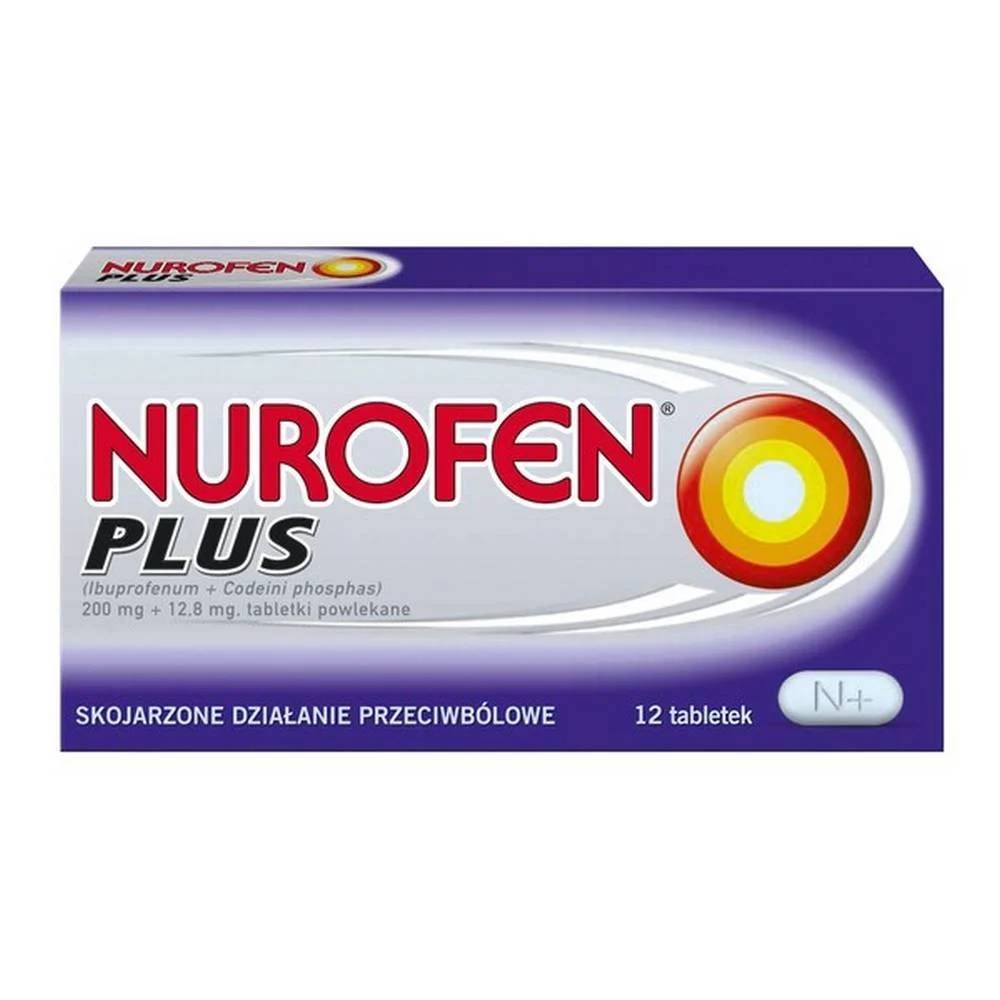


Nurofen Plus is a drug that relieves symptoms such as pain and fever.
Compound
Active ingredients: ibuprofen and codeine phosphate hemihydrate.
1 film-coated tablet contains 200 mg of ibuprofen and 12.8 mg of codeine phosphate hemihydrate.
Excipients: tablet core: microcrystalline cellulose, sodium carboxymethyl starch, pregelatinized starch, hypromellose; tablet coating; hypromellose, talc, Opasprey white M-1-7111B (titanium dioxide (El71), hypromellose).
Dosage
Always use this medication exactly as directed in this leaflet or as directed by your doctor. If in doubt, ask your doctor or pharmacist.
Adults should take 1-2 tablets every 6 hours.
Children 12 years of age and older should take 1 to 2 tablets every 6 hours as needed.
The tablets are swallowed with liquid.
Do not take more than 6 tablets in 24 hours.
The medicine should not be taken for more than 3 days.
If the pain does not subside after 3 days, consult a doctor.
Action
Codeine, another active ingredient in Nurofen Plus, is a strong pain reliever.
The combination of ibuprofen and codeine in Nurofen Plus provides a combined analgesic effect.
This medicine contains codeine. Codeine belongs to a group of drugs called opioid analgesics that relieve pain. It can be used alone or in combination with other painkillers such as paracetamol.
Indications
The drug is indicated for use in the following cases:
rheumatic and muscle pain, back pain, neuralgia, migraine, headaches, toothache, painful menstruation.
fever due to a cold or flu.
Codeine can be used in children over 12 years of age for short-term relief of moderate pain that is not relieved by other painkillers such as paracetamol or ibuprofen when used alone.
Contraindications
Nurofen Plus should not be used in patients:
with hypersensitivity to ibuprofen, codeine or any of the excipients and other non-steroidal anti-inflammatory drugs;
who have ever experienced allergy symptoms such as runny nose, urticaria or bronchial asthma after taking acetylsalicylic acid or other non-steroidal anti-inflammatory drugs;
with active or history of peptic ulcer, perforation or bleeding, including those occurring after the use of non-steroidal anti-inflammatory drugs;
with severe liver failure, severe renal failure or severe heart failure;
simultaneous use of other non-steroidal anti-inflammatory drugs, including COX-2 inhibitors (increased risk of side effects);
with bleeding diathesis;
for breathing problems;
for chronic constipation;
if you know that codeine is very quickly metabolized into morphine.
Side effects
Like all medicines, Nurofen Plus can cause side effects.
Very common: occurs in more than 1 in 10 treated patients.
Common: Affects less than 1 in 10 but more than 1 in 100 people.
Uncommon: Affects less than 1 in 100 but more than 1 in 1000 people.
Rare: occurs in less than 1 in 1,000 but more than 1 in 10,000 patients.
Very rare: occurs in less than 1 in 10,000 patients and in isolated cases.
Gastrointestinal disorders:
Uncommon: upset stomach, abdominal pain, nausea.
Rarely: diarrhea, flatulence, constipation, vomiting, gastritis.
Very rare: melena, vomiting blood, ulcerative stomatitis, exacerbation of colitis and Crohn’s disease.
Peptic ulcers, gastrointestinal bleeding, sometimes fatal, especially in the elderly, and perforation may occur.
Nervous system disorders: .
Uncommon: headaches.
Rarely: dizziness, insomnia, agitation, irritability and fatigue.
Depression, psychotic reactions and tinnitus have been reported in isolated cases.
Kidney and urinary tract diseases:
Rarely: swelling.
Very rare: decreased diuresis, renal failure, papillary necrosis of the kidneys, increased sodium concentration in the blood plasma.
Hepatobiliary disorders:
Very rare: liver dysfunction, especially with long-term use.
Blood and lymphatic system disorders:
Very rare: disturbances in blood morphology (anemia, leukopenia – a decrease in the number of leukocytes – leukocytes, thrombocytopenia – a decrease in the number of platelets, pancytopenia – a hematological disease accompanied by a deficiency of all normal blood elements: red blood cells). , leukocytes and platelets, agranulocytosis – the absence of a certain type of leukocytes (granulocytes). Initial symptoms include fever, sore throat, superficial oral ulcers, flu-like symptoms, fatigue, bleeding (eg, bruising, petechiae, purpura, nosebleeds).
Skin diseases.


